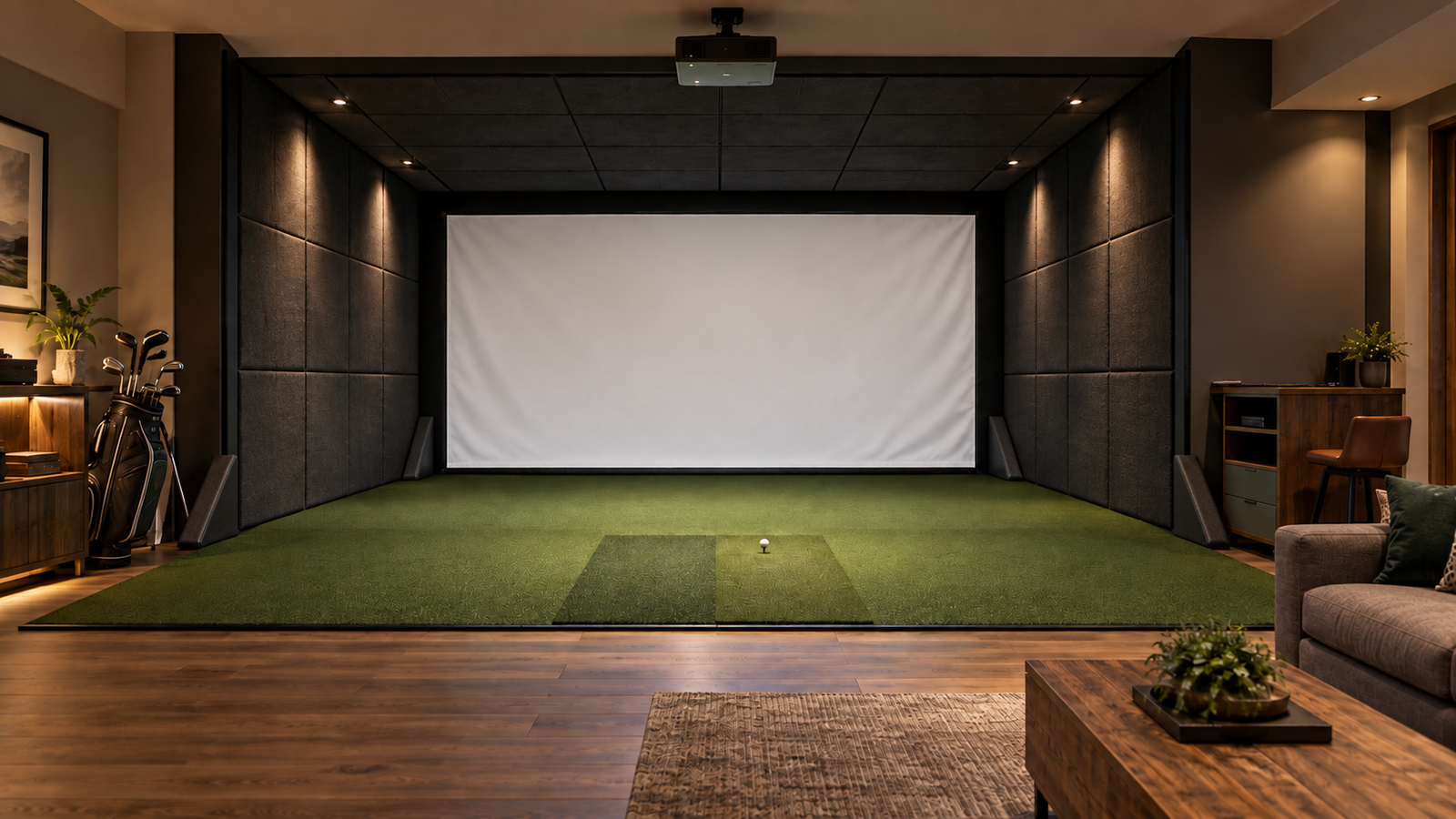
Golf Simulator Screens & Protection
The impact screen is only one part of a safe, durable simulator room. The enclosure, side walls, ceiling, flooring, and nearby fixtures must work together to contain shots and manage rebounds.
Build the Protection System in Layers
Plan every layer around the golfer’s hitting position, the room dimensions, and the kinds of missed shots the space must contain.
Impact Screen
Choose material made for repeated golf-ball impacts. Screen size, tension, rear clearance, and construction affect image quality, noise, durability, and bounceback.
Enclosure & Sides
An enclosure creates a defined hitting bay and helps catch shots that miss the screen. Side coverage should reflect room width and the golfers who will use the simulator.
Walls & Ceiling
Padding, panels, baffles, or netting can protect hard surfaces from high shots, shanks, and rebounds—especially near the front of the hitting area.
Floor & Room
The hitting mat, turf, underlayment, windows, doors, lights, and nearby equipment all affect safety, footing, noise, and the finished appearance.
Explore Screens & Protection
Learn what each component does, how it fits into the room, and what to compare before choosing a specific product.
Choosing an Enclosure
Compare enclosure sizes, frame styles, side protection, ceiling coverage, room fit, and installation requirements.
Choosing an Impact Screen
Understand screen materials, image quality, durability, noise, tension, mounting methods, and required rear clearance.
Wall & Ceiling Protection
Plan padded walls, panels, baffles, curtains, netting, and coverage around the areas most likely to receive missed shots.
Simulator Accessories
Consider side barriers, ball-return components, projector protection, cable management, lighting, storage, and finishing details.
Questions to Settle Before You Buy
- How wide and tall can the finished screen be?
- How much space is available behind the screen?
- Where will the golfer stand relative to the screen?
- Will both right- and left-handed golfers use the room?
- Which walls, ceiling areas, windows, or fixtures are exposed?
- How will the projector image match the screen’s aspect ratio?
- Can the frame, screen, and padding be installed and maintained safely?
- How much noise and vibration can the surrounding space tolerate?
Related Planning Guides
Make the Whole System Fit the Room
Confirm the screen, enclosure, protection, hitting position, launch monitor, projector, and flooring against one measured layout before ordering any component.